

Yomawari: Lost in the Dark Review
Yomawari: Lost in the Dark is the third instalment in the Yomawari series and might just be the best entry yet. The series started out on the VITA back in 2015 with Yomawari: Night Alone followed up it’s sequel Yomawari: Midnight Shadows in 2017.
Both games were re-released as Yomawari: The Long Night Collection for Nintendo Switch in 2018 and they both made for a pretty good fit for the hybrid console.
After a 5 year hiatus, Yomawari has returned to the Switch
*This review is spoiler free*
Story
The game starts with the main character Yuzu being bullied. After a particularly nasty day of being bullied at school, Yuzu awakes in a forest with a strange girl informing her she has been cursed. Yuzu is informed she must remember how to break the curse by morning, to do this she will need to find her memories which are linked to items scattered around town.
Gameplay
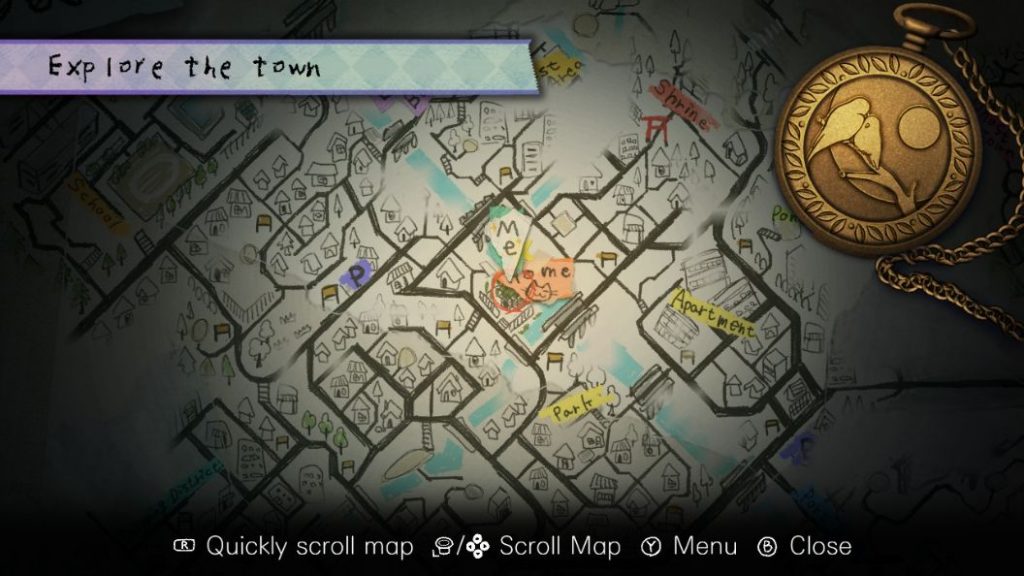
The gameplay is similar in Yomawari: Lost in the Dark as it was in its prequels, you search the town looking for items to jog your memory while avoiding the various types of ghosts, Yokai and Monsters that inhabit the town.
Lost in the Dark handles things a little differently than the previous games and has a much bigger focus on restoring memories. The general gameplay loop is as follows: You find an item, have a flashback then head to the area the flashback took place to search for yet another item.
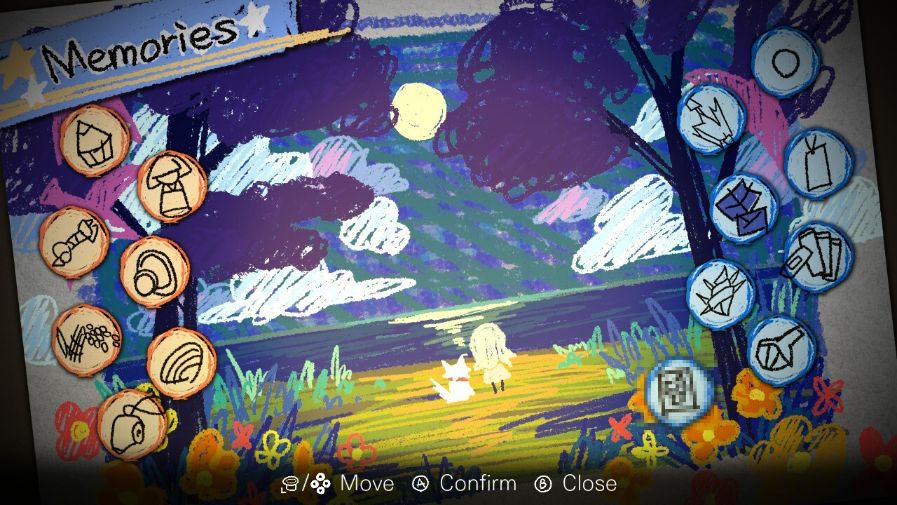
Each area Yuzu investigates from her flashbacks serves as a sort of dungeon usually with a boss at the end. Locales vary quite a lot from haunted ships to abandoned mansions in the forest and even a Cave system. There’s quite a lot of variety which helps to keep things fresh. Each area has its own mechanic/theme, The ship for instance goes full-blown Fatal Frame at moments giving Yuzu a camera to blast ghosts away.
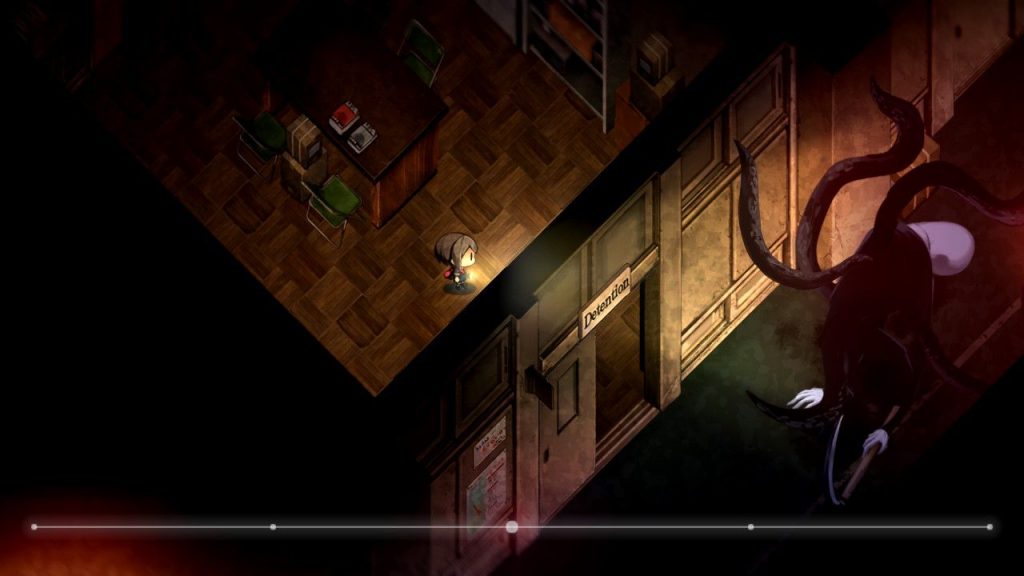
There are around six main ‘dungeons’ in the game that all vary in length somewhat. I found most areas took around an hour to an hour and a half to complete, however, I am ashamed to admit I got stuck for numerous hours not knowing what to do for a puzzle in the graveyard section of the game. I felt incredibly stupid once I figured out what to do, but it did frustrate me to no end.
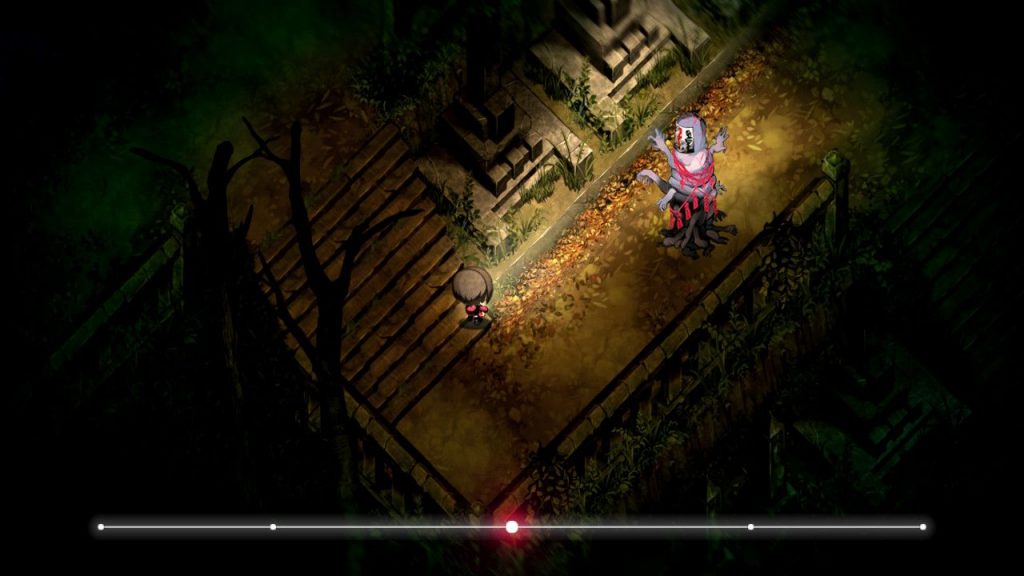
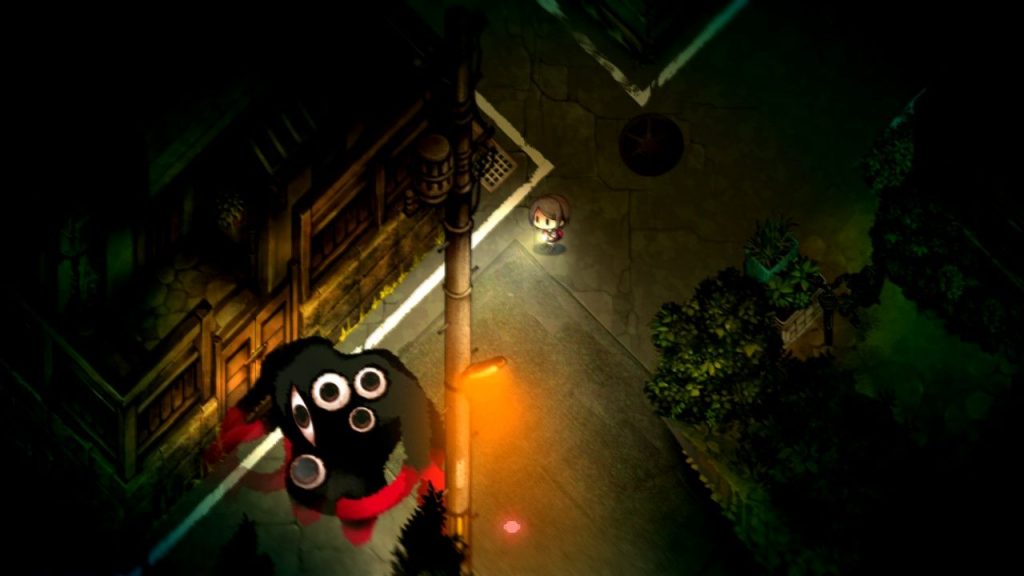
Throughout your exploration, Yuzu is equipped with a flashlight that serves a few purposes throughout the game, but the main one, as you’d expect, is to light the way. Yomawari is a very dark game, both in tone and visually. Yuzu can use her flashlight to detect wandering ghosts which would otherwise be invisible, so it’s an essential tool.
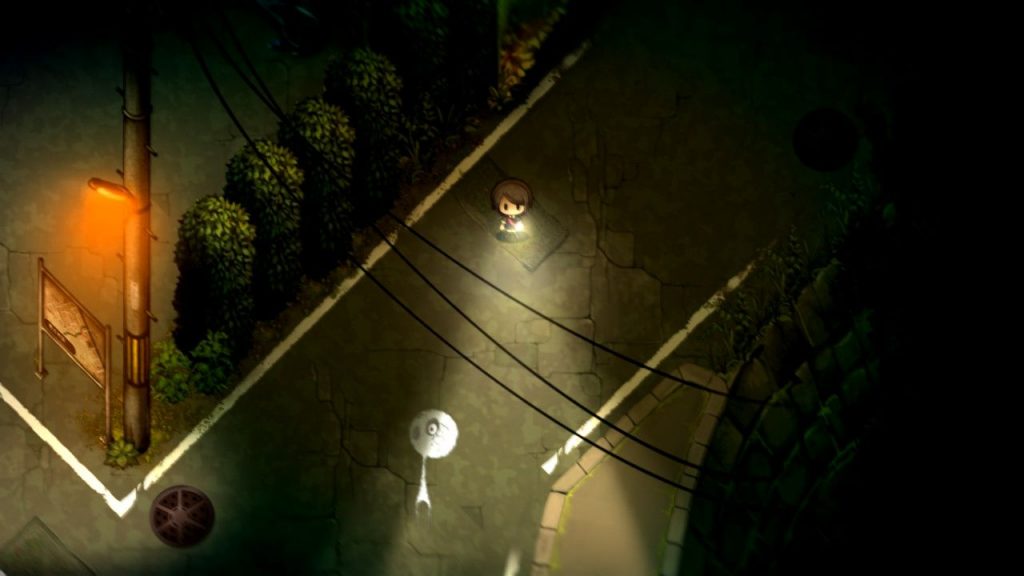
Darkness can also be your friend; Yuzu can close her eyes in order to avoid certain enemies. Many of the enemies in the game will not actively try to attack you if you don’t look at them. As soon as an enemy is nearby, Yuzu’s heartbeat will not only be heard but also felt as the game makes excellent use of the Switches HD rumble feature to simulate a heartbeat. The closer an enemy gets, the faster the heartbeat will be, and this does a fantastic job of adding to the tension. To close Yuzu’s eyes you need to physically hold down both of the controller’s triggers and at times, I found myself holding them down very tightly.
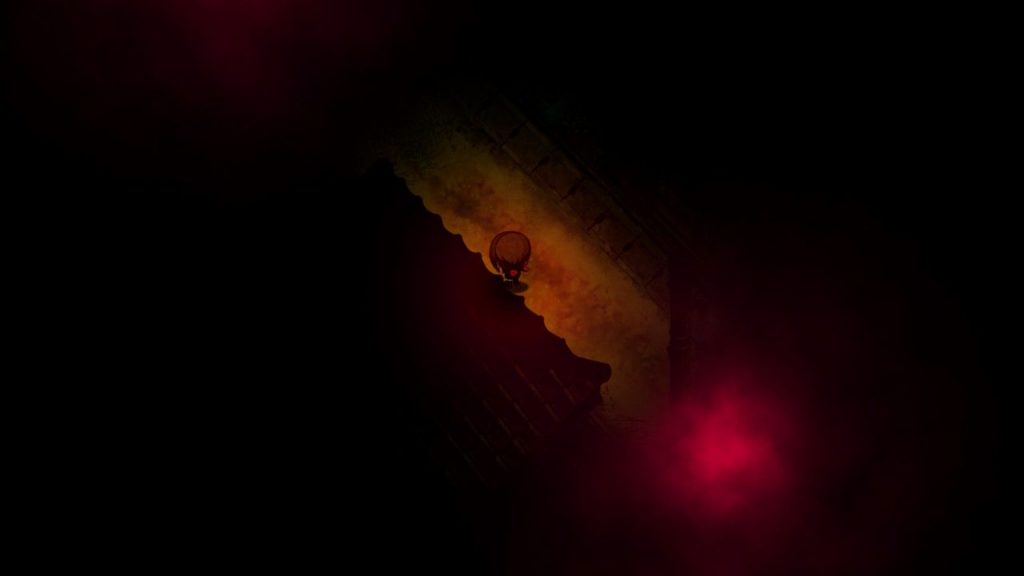
The field of vision will drastically decrease when holding Yuzu’s eyes closed and enemies will be denoted by red misty blobs. Yuzu can then tiptoe around the enemies to avoid detection, and this can be very tense at times, although the walking speed is massively reduced, which is a tad annoying at times.
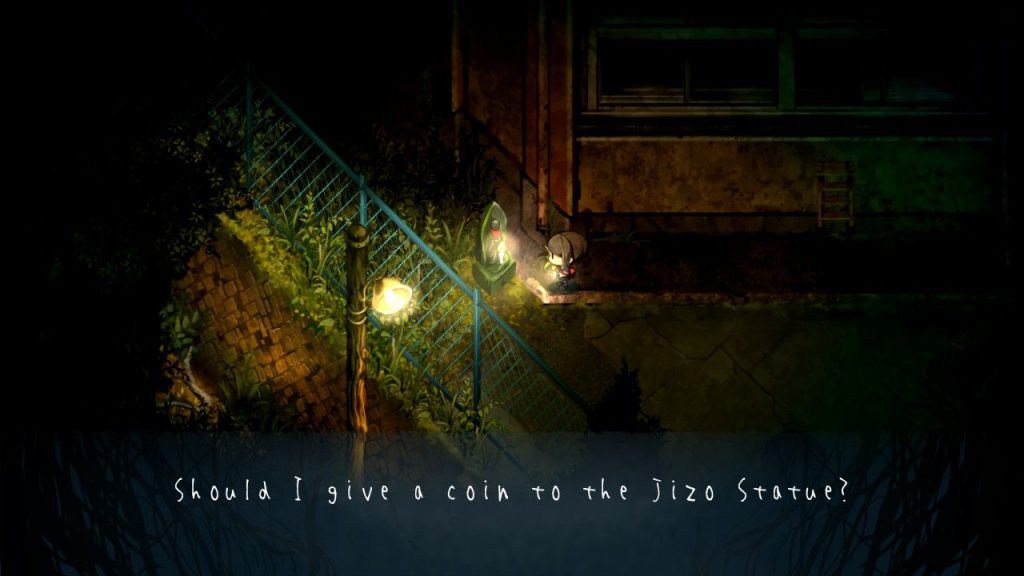
The difficulty seems to have increased from the previous games. I often found myself dying in Yomawari: Lost in the Dark, however, there’s no real penalty for death, instead, you will start back at the last Jizo Statue you made an offering to. There’s no health meter here either, a single touch of an enemy is all it takes for Yuzu to die. Thankfully, if you do happen to perish while facing one of the game’s various bosses or set areas, you will start back at the beginning of that event rather than having to find yourself travelling all the way back.
Jizo statues act as both a save point and a means to fast travel. As you explore the town, it’s worth making an offering to each Jizo statue you come across as you’ll be frequently using them, especially in the latter half of the game.
It’s worth noting that Yomawari: Lost in the Dark is a lot longer than the previous games. My playthrough took me just a little under 13 hours to complete, whereas the previous games were about 7ish hours each to complete. This was great; however, I found the pacing in the second half of the game a little poor. You must repeat certain actions, which I won’t go into due to spoilers, but it did feel a little monotonous at the time.
Another gripe I must mention is guidance, the way Yomawari guides the player could be a little clearer at times. It’s not always too clear what you should do and a few times, I had to rely purely on trial and error to figure out what to do or where to go. This could really kill the flow of the game at times, but I guess it is to be expected with any kind of non-linear exploration-type game.
Time spent waiting for the in-game text to scroll is a little too long, especially when you’ve just died to a boss and must wait for lines…. of…. Text…. To…. Slowly…. Scroll. Character animations can be a little on the slow side also which is used for dramatic effect, but on more than one occasion I actually thought my game had crashed as the characters didn’t move for over three seconds in a cutscene. It can be painfully slow at times, very atmospheric, yet slow.
A lot of the game’s bosses ‘fights’ quickly become chase sequences. These battles will make you come to despise the stamina mechanic as rely heavily on pattern recognition, one wrong turn and then it’s game over for you. The slow stamina speeds coupled with slow text and animations upon a retry made some boss encounters a chore, especially the last boss of the game.
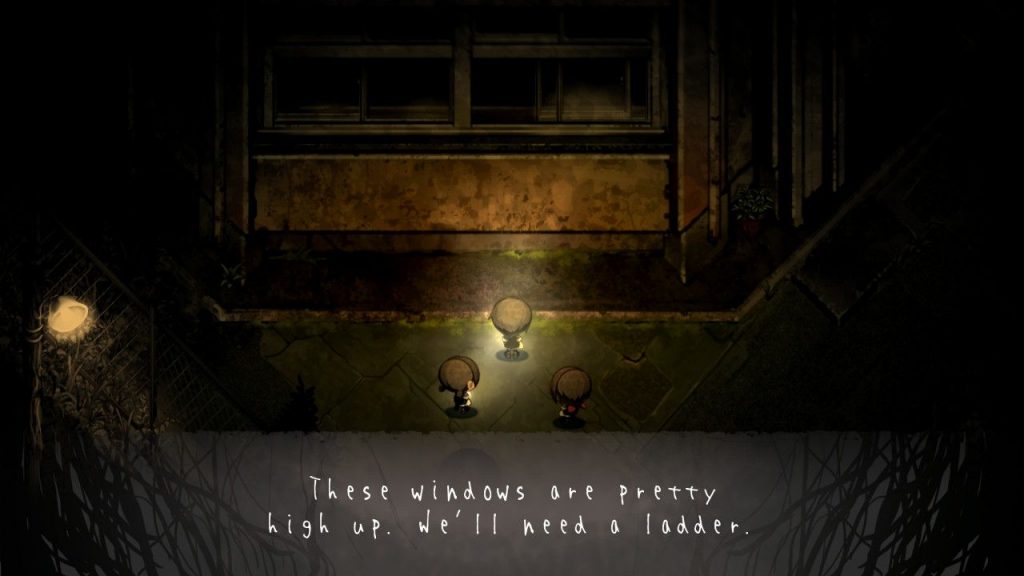
The art style in Yomawari is fantastic, and the cutesy character design may fool some people, but Yomawari is definitely not a game for children. The subject matter can get very dark at points and one late-game story revelation genuinely felt like a gut punch. The art style beautifully complimented the story and I actually paused for thought during a few of Lost in the Dark’s more poignant moments, such as on the rooftops, where you can see the ocean behind the parallax scrolling backgrounds, it all felt very real.

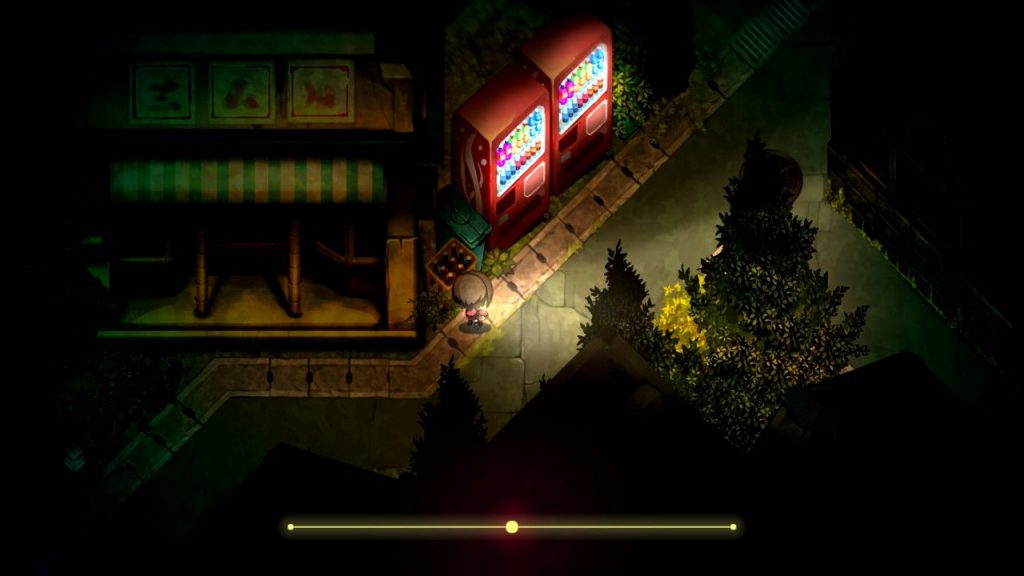
It’s not just the art style doing the heavy lifting, I also found the music, or more importantly, lack of music to be fantastic. The developers have really nailed ambient sound, the slight buzz coming from a lit-up vending machine in a dark alley to the chorus of insets and frog songs in the rice paddy or the sound of crashing waves near the sea, the town feels truly alive.
Conclusion
In conclusion, Yomawari: Lost in the Dark does a great job of immersing you in Yuzu’s story. It’s a genuinely creepy game with a great story that will keep you engaged and perhaps even get you feeling a little emotional near the end. The world created here feels oppressive yet believable. Although there are a few pacing issues here and there I would highly recommend picking up Yomawari: Lost in the Dark and I do hope we don’t have to wait another 5 years to see a return to the series.
8
Nintendo Switch review code kindly provided by NIS America