
Originally released back in 1997 for the Sega Saturn, Omiya Soft’s Culdcept is a board game & deck-building hybrid that plays like a mix of Monopoly and Yu-Gi-Oh.
Culdcept: The First Saturn Tribute marks the first time the original game has received an official English translation, and with the recent release of the excellent Culdcept Begins, it makes sense to show players where the series began.
Story
The story is somewhat simplistic but gets the job done. You play as a Cepter, a human who has the unique ability to wield and use the card-like fragments of Culdcept, which is said to be the book of creation and destruction. The more of this a Cepter has, the more powerful they are. Cepters seek out other users to try and claim more of the Culdcept for themselves. A simple premise, but it sets up the motivations for each character, with each having his or her own reasons for wanting more power.
Gameplay
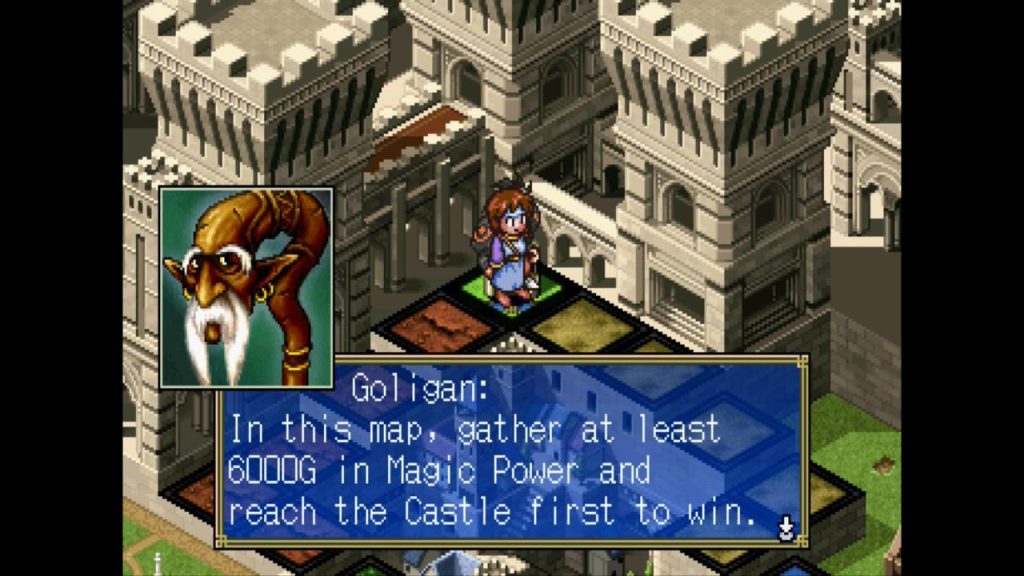
The objective of each map is to collect magical power and reach the castle first to win. Cash is awarded for completing a lap of the map and must be used to perform an action each turn.
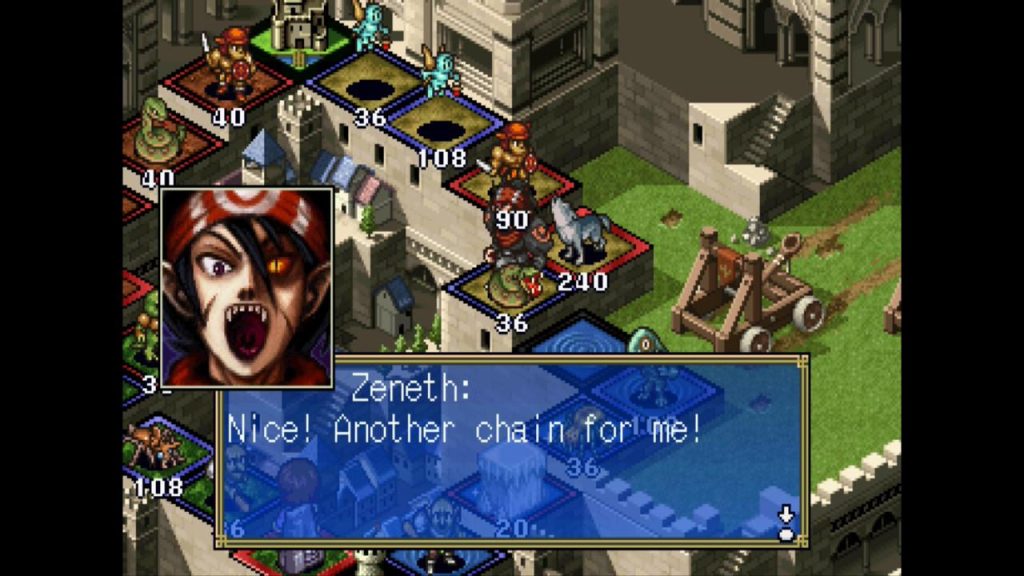
Each map is segmented into squares, which, much like Monopoly, you can claim as your own by allocating one of your creatures. The more creatures you have down, the more your magic power will rise, and the more chance your opponent will have to pay you a toll for landing on your square.
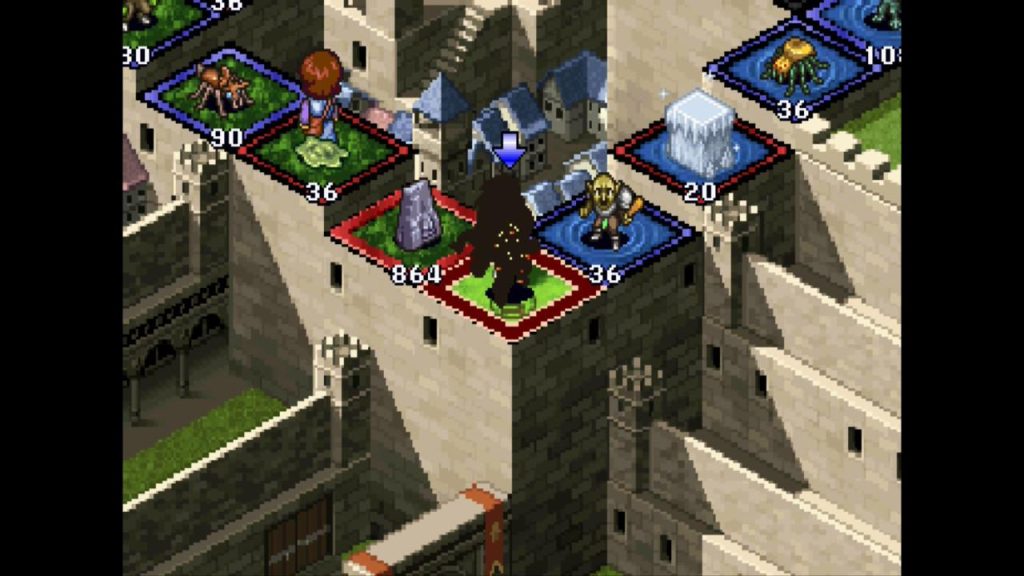
Each panel has its own elemental affinity, and putting down multiple creatures of the same element on the correct tiles will create a chain, which means the toll for the opponent landing on them will be much greater.
Upon landing on an occupied square, you have the option to pay a toll or initiate a battle with the creature placed there by the enemy. This plays out like a Magic: The Gathering match, with each card having its own HP, MP and occasionally a special ability. If the creature you choose wipes out the enemy, you can claim the land for yourself, decreasing the opponent’s Magical Power and avoiding paying a toll. If your card is beaten, it will be returned to your deck.
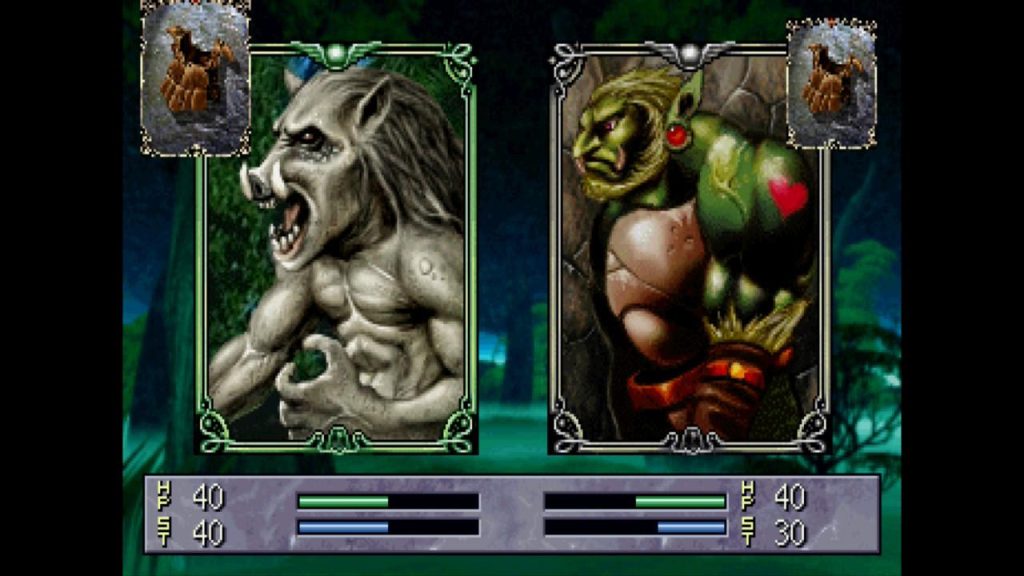
Your card deck consists of a total of 50 cards, with one being drawn at random each turn. Once all 50 cards have been drawn, they will be shuffled and returned to the deck for you to pull from again, so there’s no penalty to discarding cards, as they will reappear later on in the map.
Dotted around the maps are shrines; these can be a double-edged sword as they randomly offer a buff or hindrance, for example, landing on a shrine may inflict position on random creatures on the map, force a creature to switch sides or even offer the ability to avoid paying tolls when landing on an occupied enemy territory.
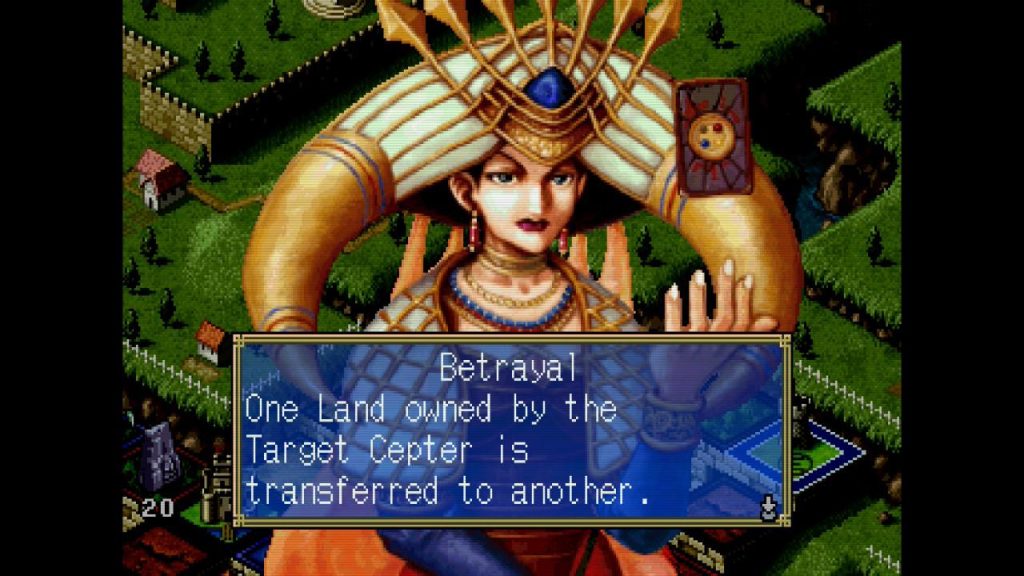
Luck is a big factor; you can go numerous turns without pulling the right type of creature, which can really put you behind. That said, the same goes for the enemy AI, so I guess there is some fairness to it even if it does seem quite cruel at times. It reminds me a little of how unfair the computer opponent can seem when playing a Mario Party game. As with most games that have a random chance aspect to them, sometimes you just get dealt a bad hand, and there’s not much you can do about it.
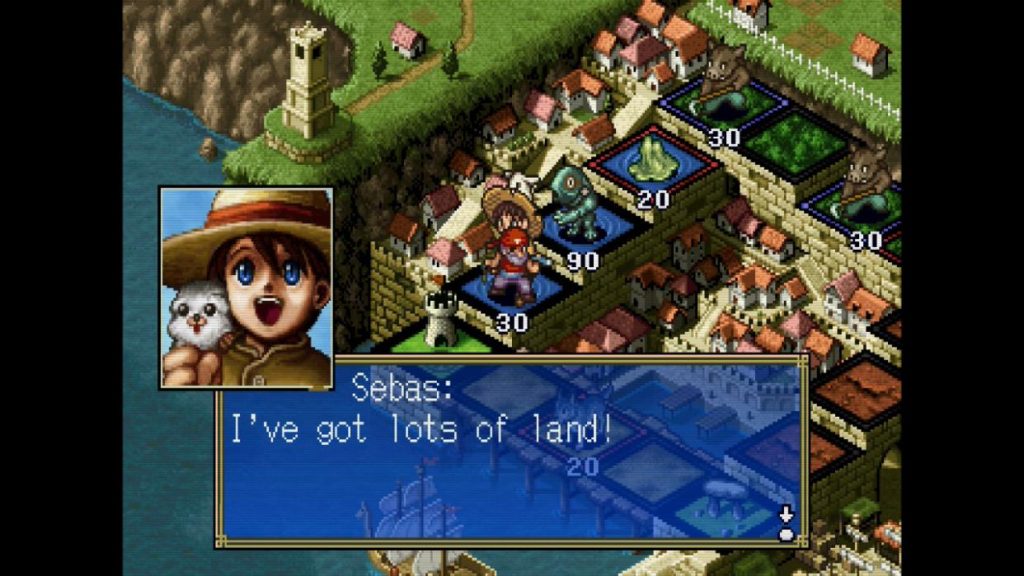
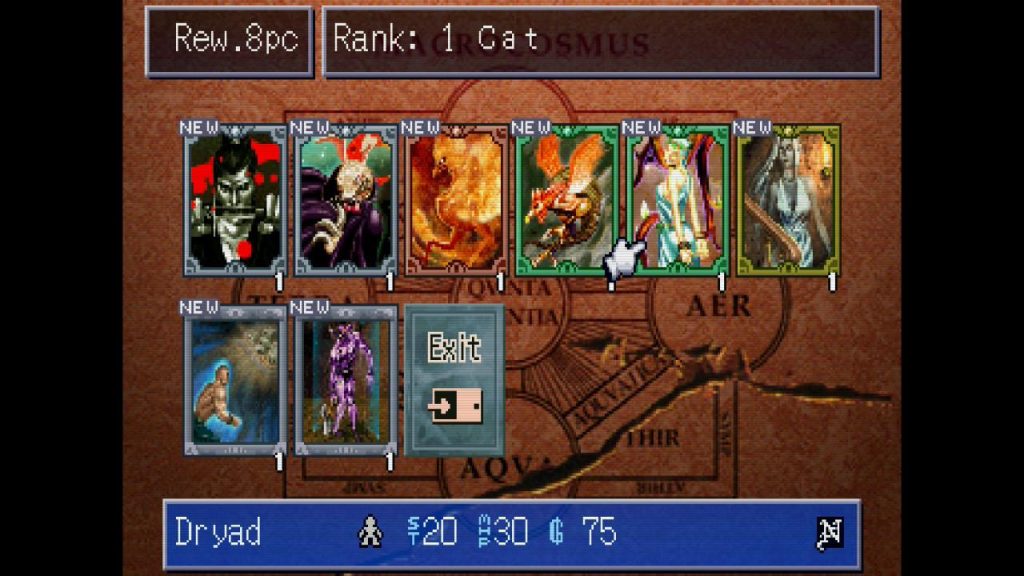
As you progress the game and build up your deck, the odds can be stacked somewhat better in your favour, with your own selected card being selected more often instead of the basic set of 50 cards you are forced to use.
Each map in the story takes around an hour or so to get through, so it can be quite frustrating when the CPU opponent seems to get the best start and claims half the board early on, and I did find myself restarting the map more than once later on in the story.
The only thing I found really annoying about the game is the enemies’ dialogue; after each move, they will often repeat a handful of phrases that just seem to slow down the flow of the game and end up being additional text prompts that I ended up mashing a button to get through. It might sound like a minor thing, but after around 40 of the same dialogue, it does get a little stale. Also, sadly, I couldn’t find any option to speed up the gameplay, which would have been a massive win in my opinion.
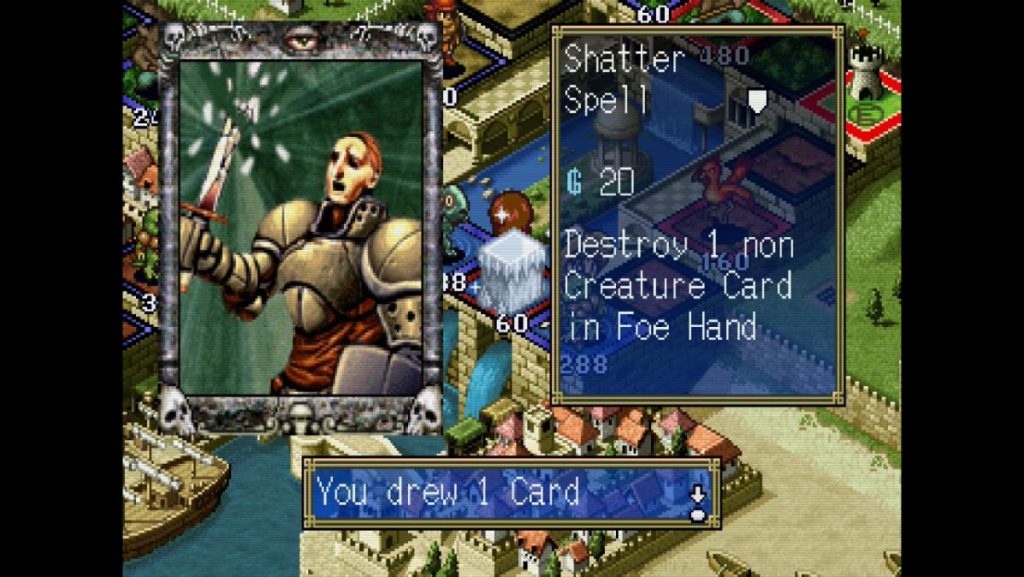
Included in this release are a few extra options and quality-of-life features, such as a rewind feature, two save states, a bonus pack feature, which increases the amount of cards rewarded after a match and the Reveal hands option, which keeps an on-screen display of all players’ hands at all times.
In terms of video options, you can have the display in a pixel-perfect mode called normal mode or a larger ‘full-screen’ 4:3 mode with a bunch of different wallpapers to choose from. There’s a very good scaling option included, which seems to scale correctly to the screen and looks quite convincing, even if a little basic.
It’s also worth mentioning that the music is fantastic and was made by legendary composer Yuzu Koshiro, and all the original English voice clips are left intact for the announcers.
Conclusion
Despite a few minor RNG frustrations, Culdcept: The First Saturn Tribute does a fantastic job of providing a way to play this classic. The gameplay loop of claiming land and battling creatures is just as addictive today as it was back in 1997; it really holds up well. I would say this release is the perfect entry point in the series and also for series veterans as a great history lesson into the origins of the series. I really hope we get some more releases in the Culdcept series, and I would love for them to tackle Culdcept II at some point!
9
Nintendo Switch review code kindly provided by Overload PR