
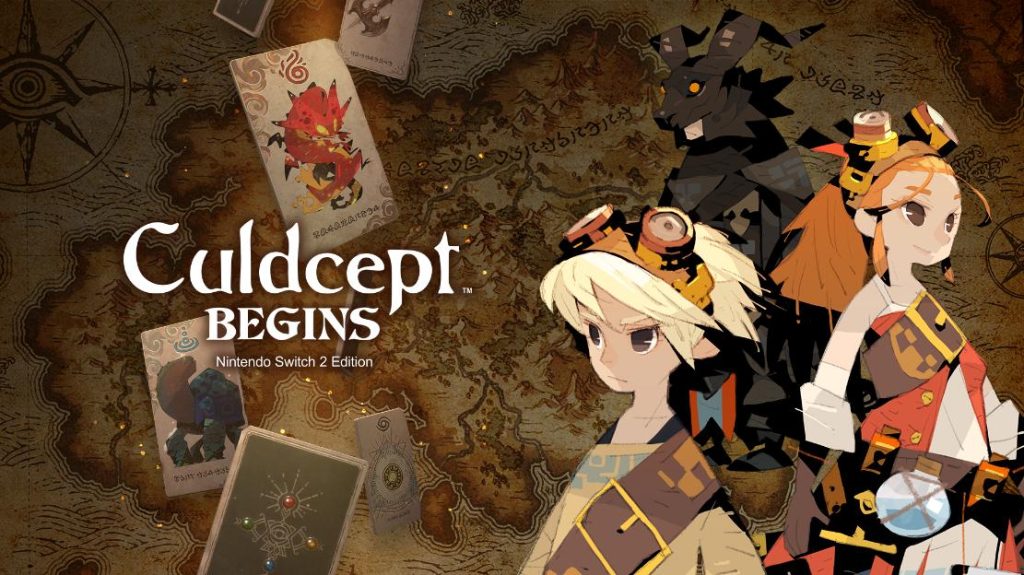
The Culdcept series has a long, albeit largely non-Western, history dating back to 1997 on the Sega Saturn, known simply as Culdcept. In fact, that original Japanese game is getting a modern release coming soon via City Connection as part of their Saturn Tribute range, but that is not the game we are talking about today.
Culdcept BEGINS is a prequel to the entire series, making this the ideal starting point to jump in.
Story
Our story begins with a flashback to the past, explaining that Culdcept, a force governing the universe, fractured into card-like fragments known as Culds after a war between the gods, spilling through their hands and scattering across the land of Bavrashka.
After some time, it became apparent that some people could draw upon the power of the culds and would become known as Cepters.
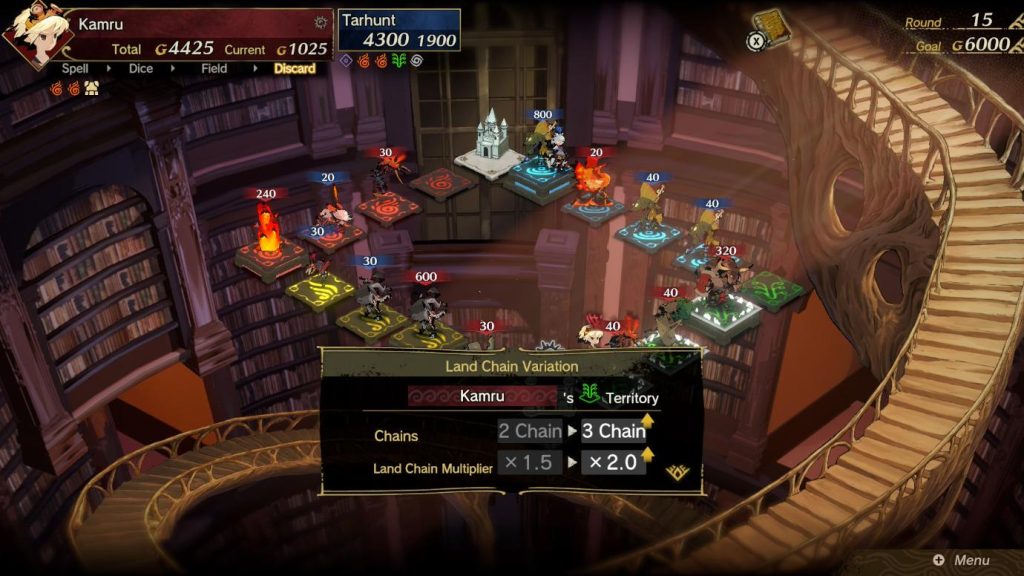
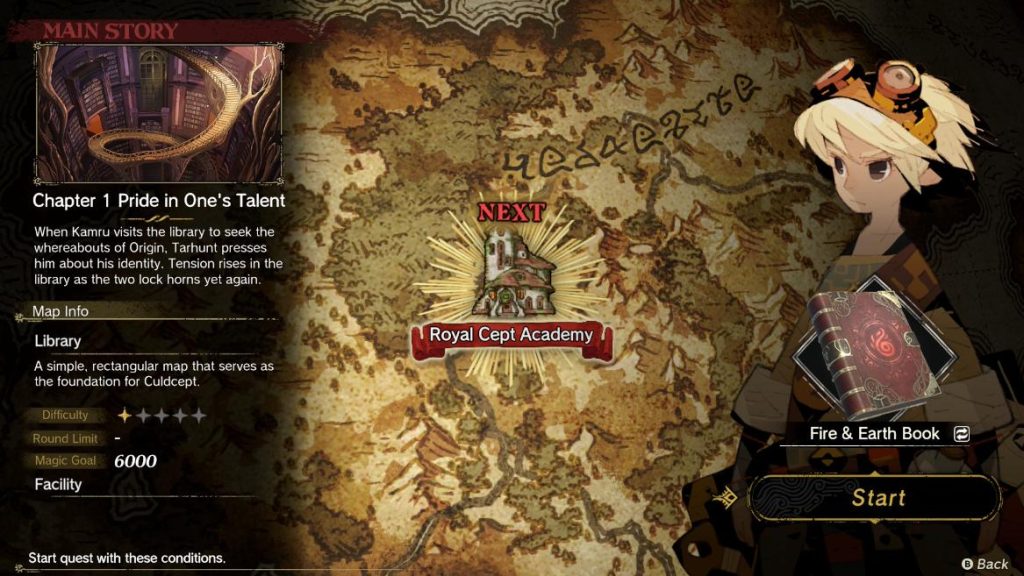
Culdcept BEGINS has you playing as the protagonist, Kamru, as he journeys across the continent in search of his Father, a well-renowned Cepter and hero known as Origin, who has disappeared. Thankfully, before leaving, he told Kamru to enrol in the Royal Cept Academy, a training ground for would-be Cepters, and much like his father, Kamru is exceptionally talented in using Culds.
Along the adventure, you’ll discover a lot of sub-plots and characters offering clues to where your father is, but the story is not exactly where I would say Culdcept BEGINS excels; it’s the addictive gameplay loop that will have you hooked.
Gameplay
At its core, Culdcept BEGINS is a virtual board game sharing a lot in common with Monopoly. What sets it apart from a simple Monopoly clone is the card system, or culd system to be more precise. Not only do you traverse around a board, taking turns rolling the dice and moving your characters, but you can also use your cards against your opponents like a tabletop card game like Yu-Gi-Oh! Or, more fittingly, Magic: The Gathering.
Each battle starts on a map composed of various square tiles. These maps start pretty simple to begin with, but after a few hours in the game, you’ll end up on massive, sprawling maps with branching paths more akin to a complicated Mario Party map.
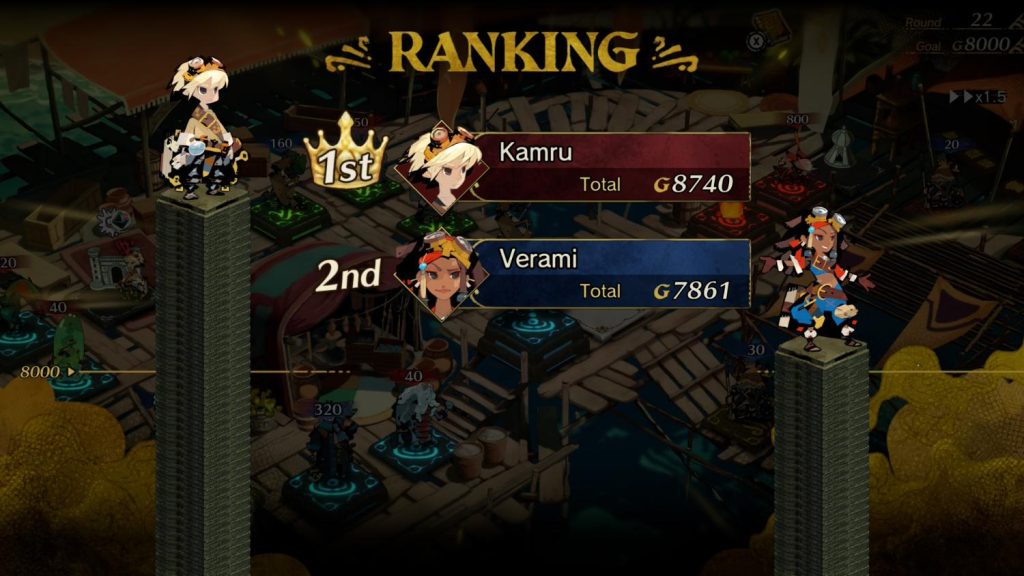
With a roll of the die, your character will move across the board and on any unoccupied tile you land on, you may use a card to summon a creature. Doing so will award you more magical power, with the overall winner being the player who gathers the most magical power during the match.
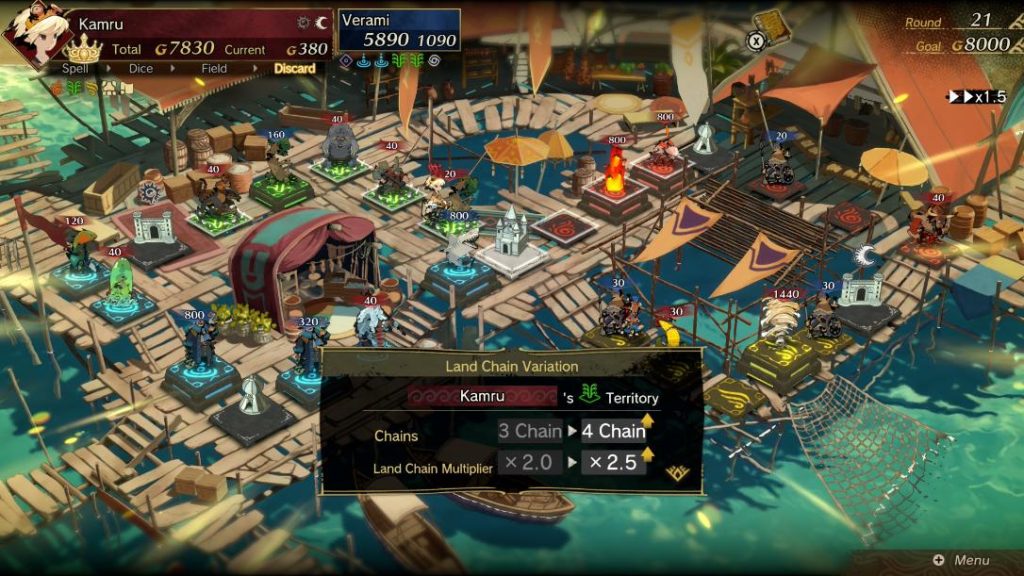
Each turn, before rolling the die, you’ll be given one card from your book, and you’ll be able to use a single spell card. Spell cards can really turn the tide by having effects such as destroying your opponent’s cards in their hand or locking the die to only allow them to move 1 tile on the next round.
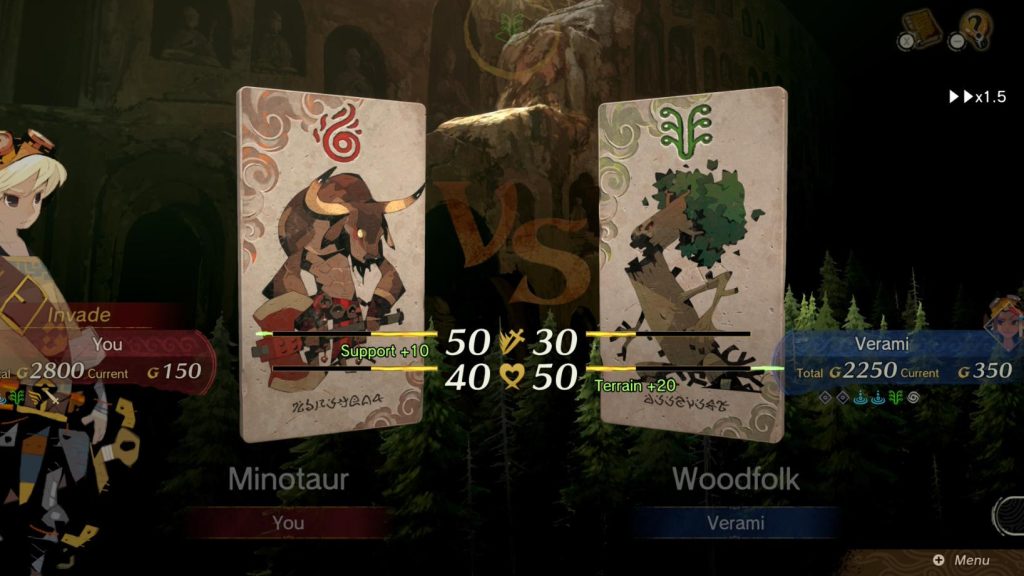
Battles are initiated by landing on an opponent’s occupied tile, and on the surface, they seem simple enough. Each summoned creature has a set amount of HP and AT (Attack), with the higher number proving the victor. That said, looks can be deceiving, and while battling, each character gets to choose an additional support card to help bolster those stats, which could be anything from equipping them with a sword or set of armour to a spell scroll that unleashes a large amount of damage. It’s addictive, and you can easily lose fights you were sure you were going to win, all thanks to an opponent’s ace up their sleeve.
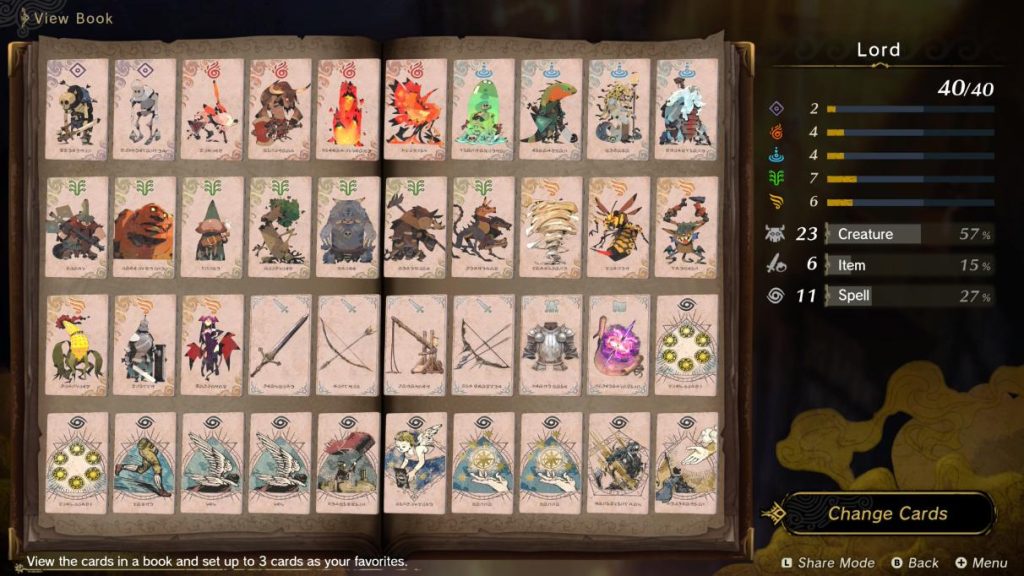
Card management is important if you want to come out on top, and you have an awful lot of freedom in how you build your setup. Between chapters, you can edit your books. You can think of your books as a loadout, each containing 40 cards you can take into battle. As you earn more cards, it’s worth curating each of your books. It’s a nice feature and lets you test out different combinations and tactics if you are finding an opponent particularly troublesome.
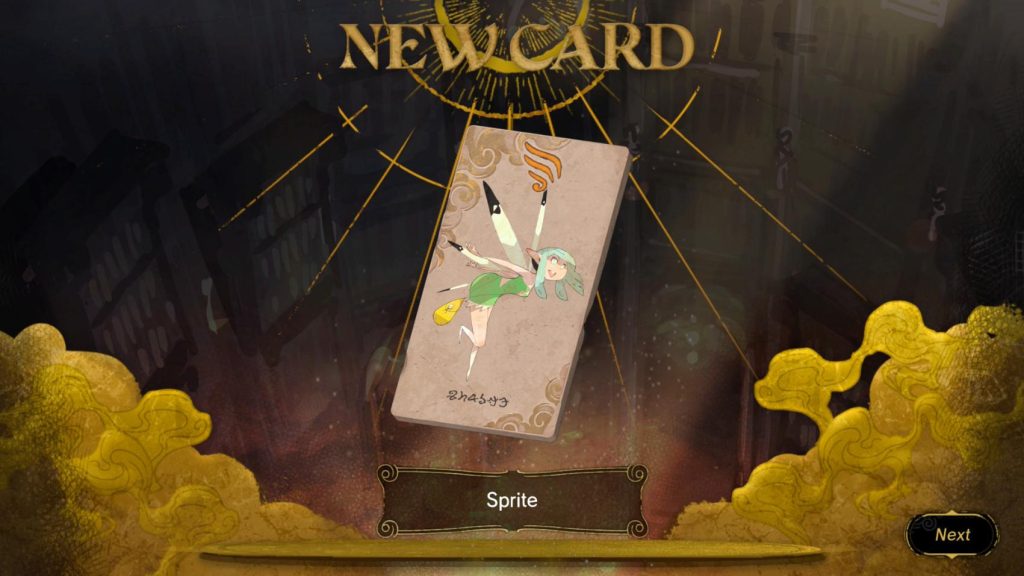
After a couple of the main story missions, you’ll unlock the Card Shop. With there being a whopping 400 cards to collect, the shop becomes an invaluable asset. From the shops, you can spend your earned currency to purchase booster packs or individual cards to beef out your collection, with more powerful packs becoming available as you progress through the story and earn more titles by collecting cards.
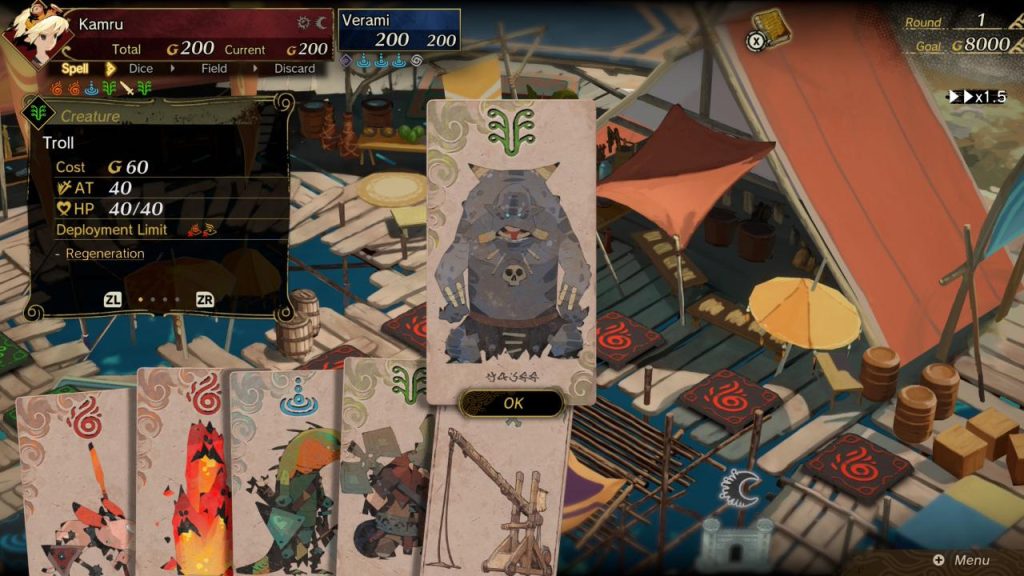
The art direction here, compared to previous entries, is very different, and I can imagine it’s going to be very divisive. Personally, I wasn’t sold on its hand-drawn style at first, but as I actually played the game, it grew on me over time.
Another minor gripe I have is that the default gameplay speed felt a little off to me. Your characters moved just a tad on the slow side while the enemy turns seemed to blitz by, especially when they were choosing cards, and often, they chose their cards so quickly that I wasn’t able to read what the effect of their card was.
This was much more of an issue for me in the opening few hours as I was figuring out the game’s mechanics. It felt like my turns were taking forever while the opponents were breezing by. Thankfully, you can speed up gameplay in the menu up to 2x at any time, and as you progress, you’ll soon learn what each card does at a glance, even at the faster pace.
Early in the game, you’ll unlock the ability to play matches. These are non-story-based, and you can choose to play Solo (With CPU), against other players in the Online mode or even take part in a PVP Match with someone who doesn’t own the game via GameShare. The addition of the GameShare option is great, and I feel a game like Culdcept BEGINS is the perfect type of game for this feature.
Conclusion
Culdcept BEGINS offers an exceptionally addictive blend of board game strategy coupled with excellent deck-building mechanics, even if its story is nothing to write home about. Once that gameplay loop clicks, it becomes very difficult to put down, and you’ll soon find yourself losing hours while slowly building up your card collection.
Culdcept is back, and if you have ever been curious about the series, then do yourself a favour and add this to your Switch 2 library.
9
Nintendo Switch 2 review code kindly provided by Overload PR