
* This review focuses on Makai Kingdom: Reclaimed and Rebound which is one half of the Prinny Presents NIS Classics Vol. 2. A separate review of the second game in the package (ZHP: Unlosing Ranger vs. Darkdeath Evilman) will follow shortly. *
Prinny Presents NIS Classics Vol. 2: Makai Kingdom
Originally Released back in 2005 as Makai Kingdom: Chronicles of the Sacred Tome and also known as Kingdom Wars in Japan. The Makai Kingdom is a Spin-off from the Disgaea series, releasing a couple of years after the first Disgaea game and less than a year before the sequel.
This was followed by an enhanced Japanese exclusive port for the PSP in 2011 which Reclaimed and Rebound is based on. The version of Makai Kingdom included in Prinny Presents NIS Classics Vol. 2 includes Petta mode, which is the first (official) English translation and is an extra mode revolving around our main character’s time travelling daughter Petta. This is a nice addition and I remember there being a lot of people who downloaded fan translations back in the PSP days, and it adds a fair bit of content designed to be played after the main story.
Story
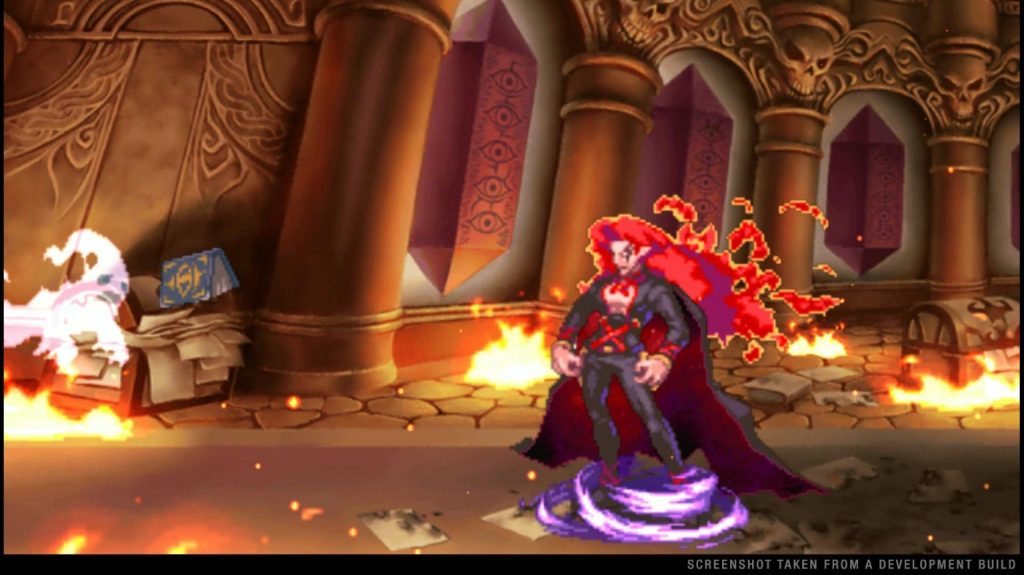
Makai Kingdom’s story starts with our protagonist Zetta finding out his Netherworld is going to be destroyed. You see, most main characters in the Makai Kingdom are high-level Demon overlords who control their own pocket dimensions known as Netherworlds. Zetta finds the reality controlling Sacred Tome and reads the page that outlines the destruction of his Netherworld.
In a fit of anger, Zetta torches the book before realizing that he has inadvertently just destroyed his netherworld. He quickly uses magic to bind his soul to the Sacred Tome to save himself leaving him as a sentient book that can no longer fight. Lucky, Zetta has the power to summon units from items such as flowers and rocks. With these summoned units, Zetta just might be able to rebuild his netherworld and return to his normal corporeal body.
Gameplay
At its core, Makai Kingdom is a turn-based strategy role-playing game. If you’ve played a Disgaea game before, you’ll feel right at home here as a lot of gameplay elements are shared.
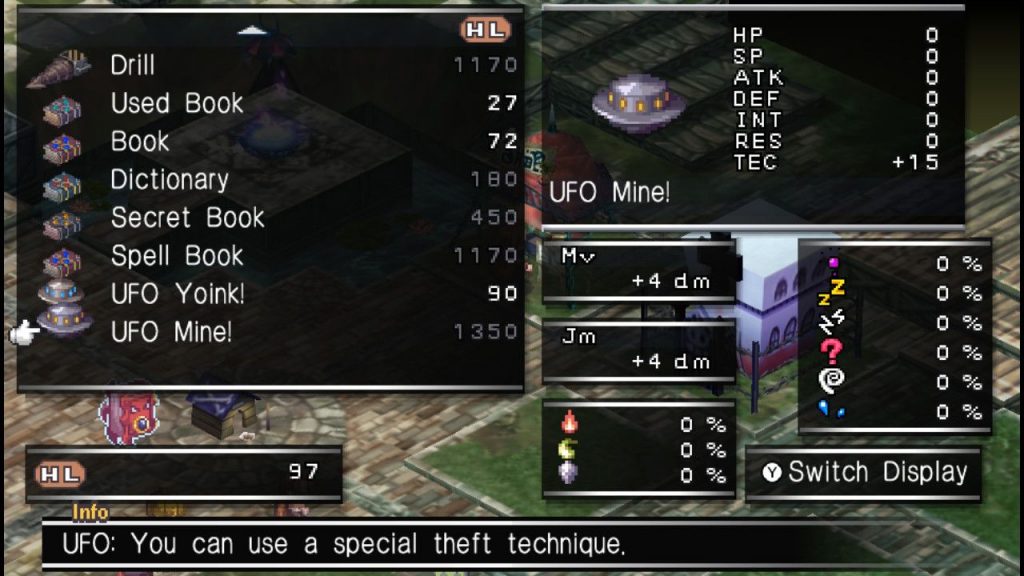
Gameplay and essentially be stripped down into two sections. The first section would be our base of operations, this is where we can create new units, buy weapons and armour, heal and resurrect our units etc. The base will expand as you progress through the story and make wishes which you can do by speaking to Zetta, at a cost to your accumulated mana points. You can use these wishes to level up facilities such as the shop, which will allow for the purchase of high-level weapons and armour.
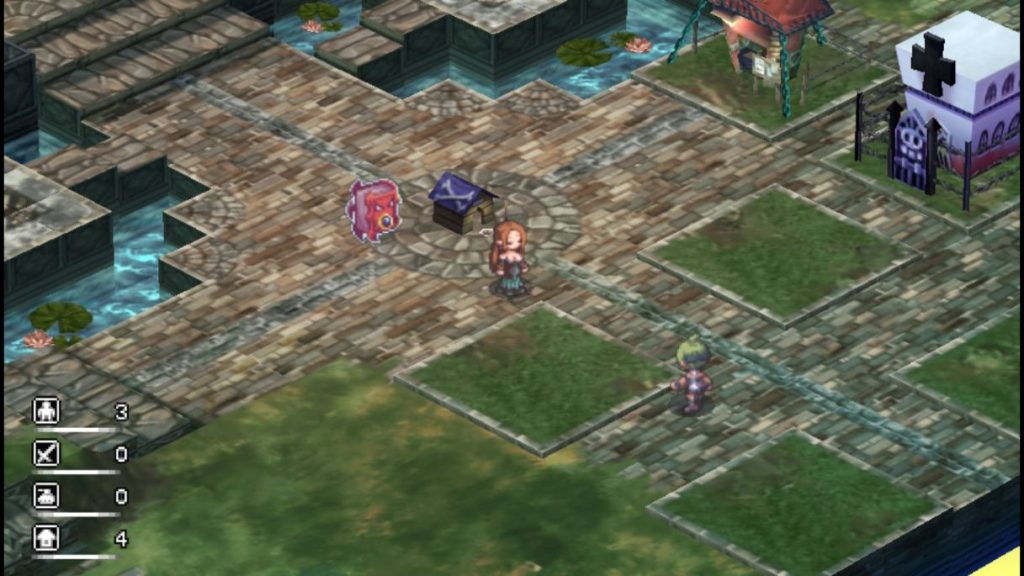
We return to the base after each battle, and you can talk to your units to get some throwaway lines of dialogue revolving around the current situation in the story. Heading over the dimensional gate will allow you to travel to the next area to continue the story or partake in several grinding or challenge maps, which open as your progress through the story.
Once you’ve selected your next battle, we get on to the highlight of the game: the battles.
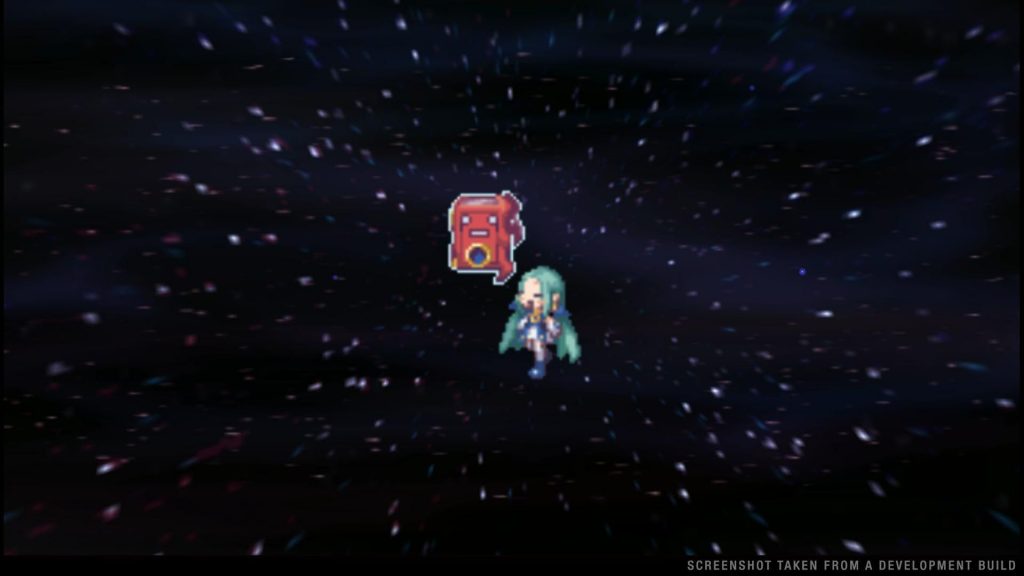
Each battle takes place on an isometric diorama style map with a set number of enemies. At the start of each map, we will only have Zetta on the field. In his book form, he can ‘Invite’ your units onto the map, which will send them hurtling down, prepped for battle.
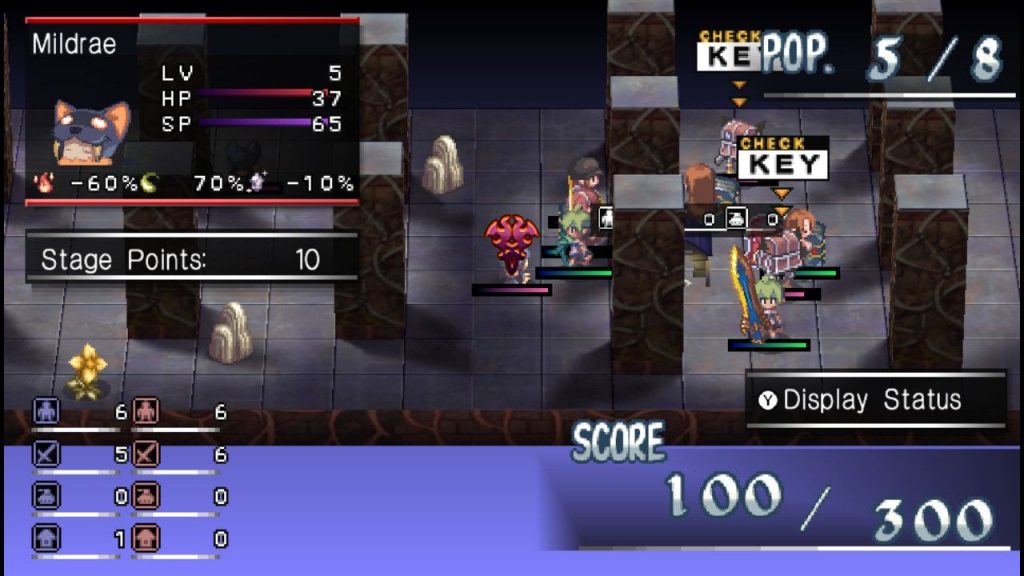
Once you have your team assembled, you can move them across the map toward the enemy. Unlike Disgaea, your units are not bound to a grid system, instead, Makai Kingdom allows for free movement, with a circle around your character. This can be increased as your level up etc. The enemy units will advance towards your characters and attack at the end of your turn.
You can choose whether to execute an attack upon immediately getting in range of an enemy unit, you put all your units lined up and attack them all at once by ending your turn. This style of gameplay will be very family to anyone who has played other turn based SRPGs such as Fire Emblem, Advance Wars or, especially Disgaea.
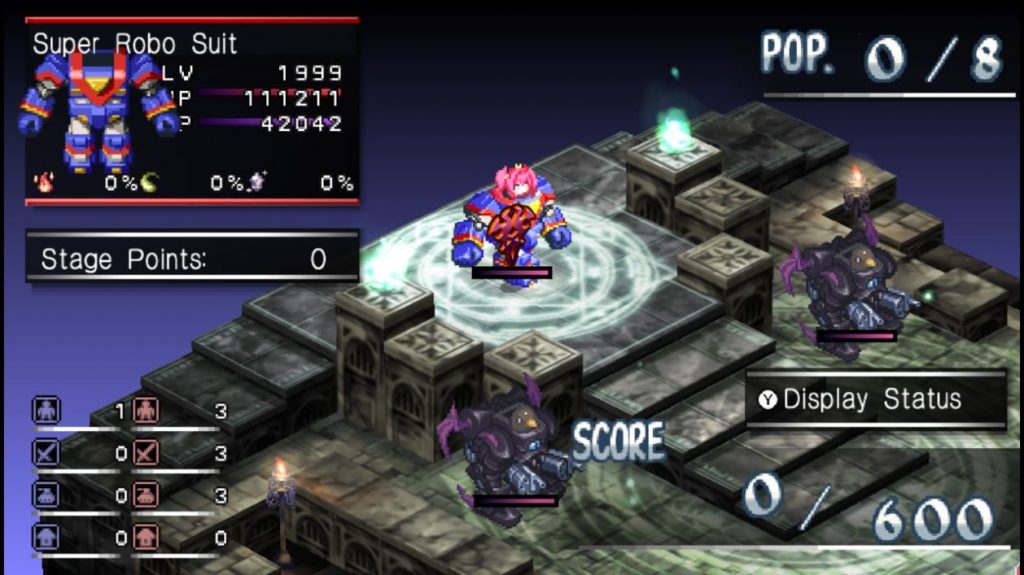
As you progress through the story and improve and upgrade your units, you’ll be able to group them together so you don’t have to use the invite mechanic on every unit which would get tedious, instead of summoning down a building from your base with your chosen units inside them. You can think of these as mini forwarding bases and you can organize which unit inhabits them one upon returning to our base.
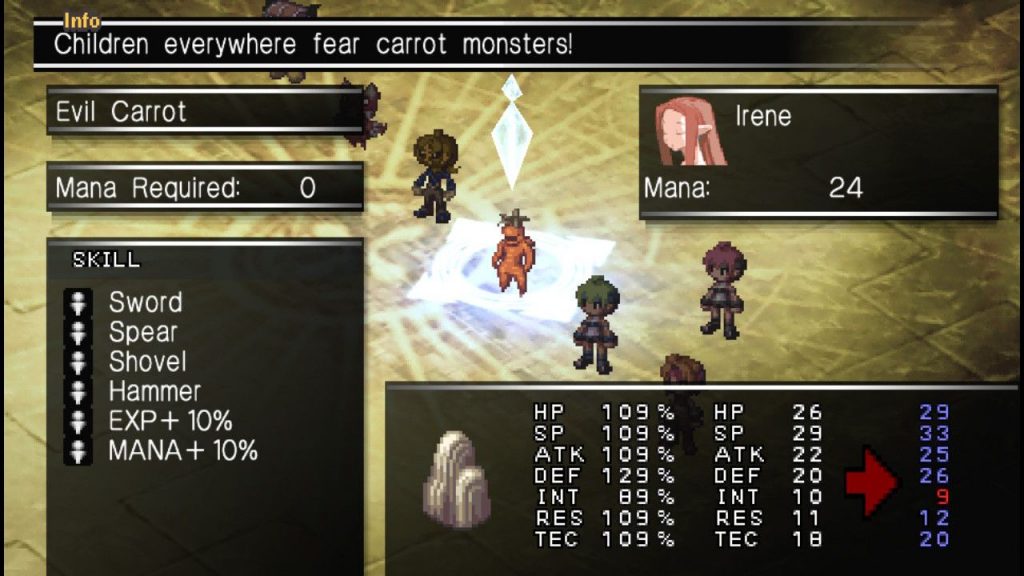
There are so many different systems inside the Makai Kingdom that makes it hard to sum up in one review but if I had to explain the gameplay in one word it would be Addictive. The general gameplay loop of clearing maps while levelling your characters quickly becomes second nature and seeing your characters grow is quite satisfying, you never really feel like you are wasting your time as every single scrap of exp, or mana is useful in upgrading your characters.
The writing in the Makai Kingdom is hilarious and is classic Nippon Ichi Software being over the top almost Anime / Saturday morning cartoonish at times. The characters are all very well written with clear objectives while still managing to keep the overall feel of the game light-hearted which is a nice change from the grittiness that most strategy RPGs are known for.
The same can be said for the music, it’s classic Nippon Ichi and that’s no bad thing as I caught myself humming the main base theme over the last couple of weeks while doing chores around the house.
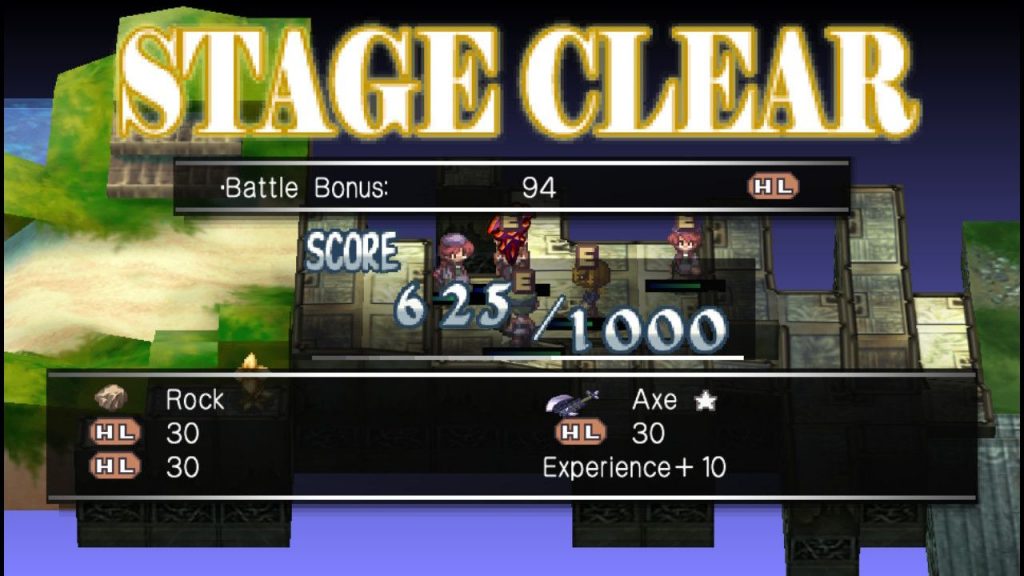
The art style is essentially the same although with a resolution bump and by default, the game has a smoothing filter applied that really does give off a strong PSP-esq aesthetic. This can be disabled in the menu which allows for a better look at the pixel art and is my preferred method of playing the game. I am not sure if this is a new feature or one that has been added specifically for this collection, but it’s a nice option either way.
Conclusion
Makai Kingdom is an addicting game and it’s nice to see NIS embracing their older back catalogue, although it would have been even nicer to see a few more quality of life improvements and features added. The game is just essentially the Japanese PSP version finally translated but not much more. That said, the main campaign alone will easily take you between 40 – 60 hours to complete depending on your playstyle and the inclusion of Petta mode will bump that up even further. I would say Makai Kingdom is well worth your time, especially if you are a fan of other NIS series such as Disgaea or La Pucelle (which features in the upcoming Prinny Presents 3).
8
Nintendo Switch review code kindly provided by NIS America