
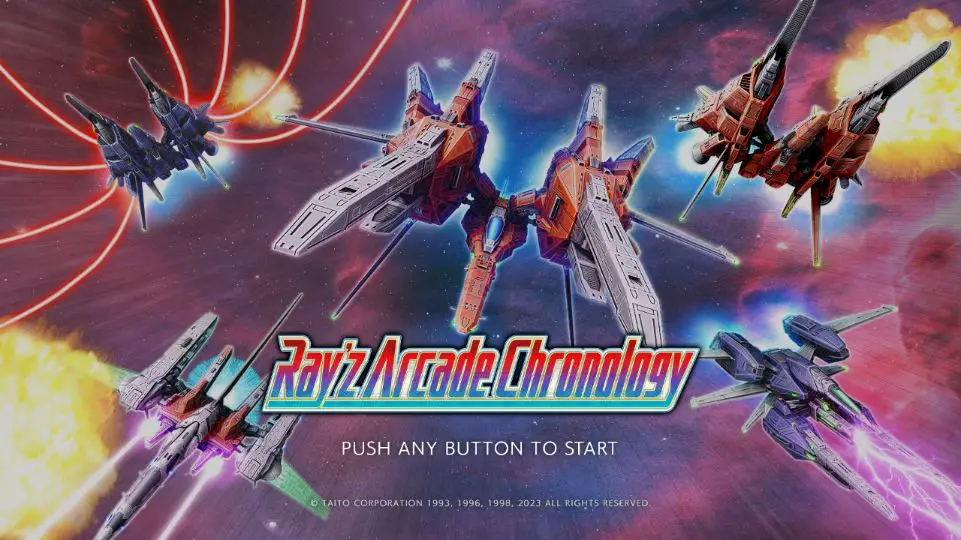
Ray’z Arcade Chronology Review
Before I get into the review, there seems to be a lot of confusion as to what version of the game to get or what does it include. There are two collections just released by ININ Games: –
Ray’z Arcade Chronology
Ray’z Arcade Chronology is a collection of 3 games from the ‘Ray’ series RayForce, RayStorm, and RayCrisis with the latter two having HD versions included for a total of 5 different games. This is the collection we will be reviewing today.
RayStorm x RayCrisis HD Collection
This collection includes RayStorm and RayCrisis plus the HD versions of both but does not include RayForce.
It may seem a little odd to have two collections with one just missing one title, but there was a release a while back by the publisher City Connection as part of their S-Tribute or Saturn Tribute range called Layer Section & Galactic Attack which solely included a port of the original RayForce. If you already owned that title, I can see how having RayForce on yet another collection may seem redundant.
To add slightly even more confusion, if you purchase the Strictly Limited Games version of Ray’z Arcade Chronology you’ll also have access to an additional title R-Gear, a single-level prototype of a cancelled sequel to the original RayForce. Confusing stuff, eh?
Now, I would argue that even if you own Layer Section & Galactic Attack you should still check out the Ray’z Arcade Chronology, firstly due to having all three titles in one handy little package and secondly because the porting was handled by M2.
M2 are one of if not the best porting teams I have come across. They really do set the gold standard in terms of emulation and extras, and they truly seem to care about the source material at hand for near-perfect arcade ports, City Connection on the other hand make great, usually quite bare-boned ports which often have a 50/50 chance of suffering from a degree of input lag and sadly, their Switch version has around 6 frames of lag. When playing shmups like this collection, you want to have the lowest input lag as possible and from what I can tell, the port of RayForce is very much superior and far more snappier.
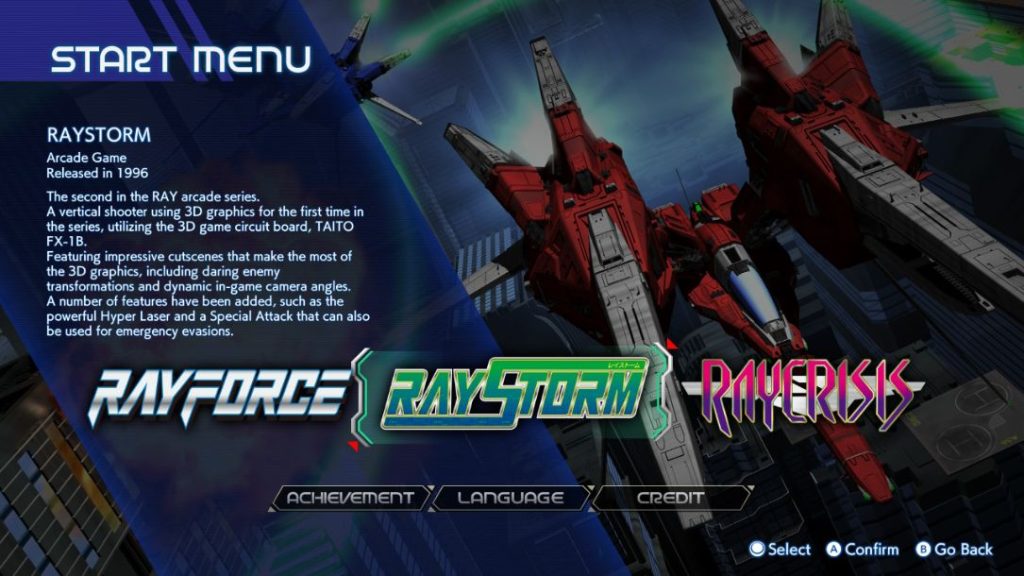
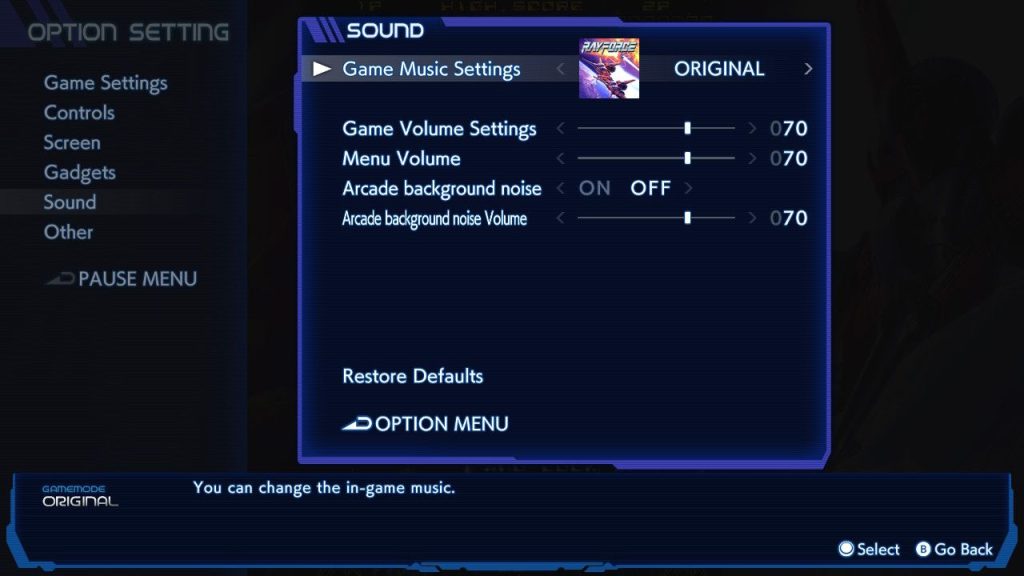
Being an M2 port each game has a plethora of options to choose from including ranking systems, replay galleries, in-game manuals for each game, the ability to register up to three custom control schemes for each game and even dip switch like setting allowing tweaking of the scoring, difficulty and lives.
There are also options for screen sizing, save states and numerous ‘gadgets’ M2 are famous for that sit on the edge of your screen giving you info on the level, music playing etc. Taking things a step further M2 included the option for an alternative OST for each game as well as implementing a light achievement system, very impressive stuff overall!
RayForce
RayForce is a vertical shooter originally released back in 1994 for the Taito F3 arcade machine. RayForce has confusingly gone by 4 different names across the years. The Sega Saturn port had a name change to Layer Section in Japan due to some trademark issues and in North America and Europe it was renamed Galactic Attack. To confuse matters further, the European arcade release saw yet another name change this time to Gunlock.
RayForce plays your traditional vertical shmup at first glance with the series gimmick being the action takes place on multiple layers, you have a reticle slightly ahead of your ship which locks on top enemies below the current level. It works a little like the bombs did in the original Xevious except this time around you lock on and fire a laser. You are encouraged to lock on to as many enemies as possible with a maximum of 8 beams shot in a single volley.

Along with this mechanic, you have your usual standard shot to deal with any enemies on your current plane. It adds an extra level of depth (pun fully intended) as if you don’t eliminate an enemy below you they will soon appear close up leaving you to deal with them with your weaker regular shot, not to mention the bullets they will be sending your way. Prevention often is the key to success.
RayForce has gorgeous 2D graphics, I really like the style here the most out of the whole collection. The top-down 2D perspective allows targeting enemies below and feels great and the occasional 3D transition effect midgame looks very impressive and really stands out.

The main thing I like the most in the series are the boss battles, all the bosses here have destructible parts which greatly hinder their abilities and it’s a lot of fun being able to blast these parts off, especially if using a well-timed laser blast.
Being a vertical shooter, RayForce has the option of tate mode which looks great, I personally really enjoy playing my games in tate mode so it’s a nice inclusion (I also recommend checking out the LG Dualup which is great for shmups!).
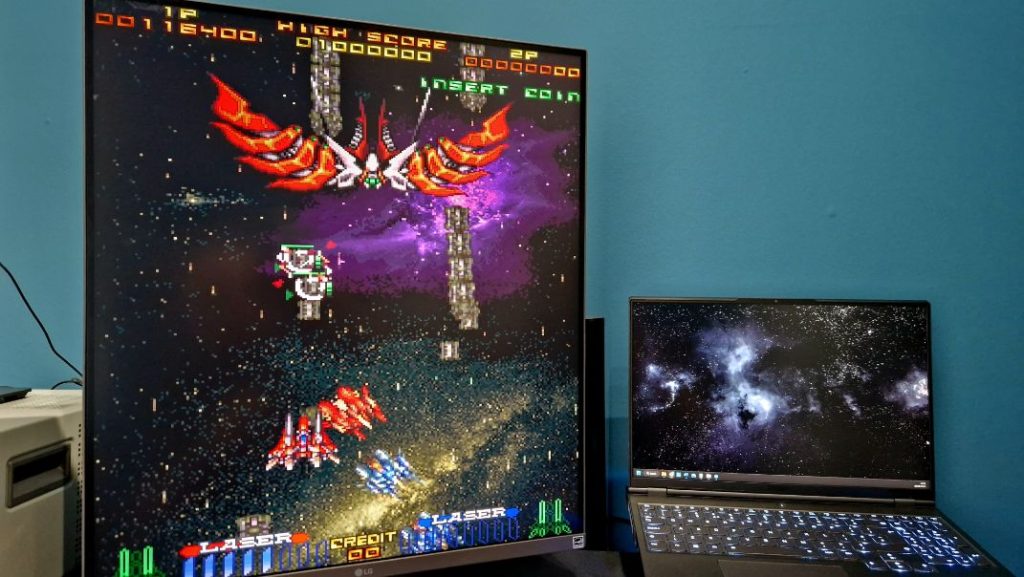
Overall, RayForce is a great game and probably my favourite in the series, it’s such a shame we never got a full version of the sequel R-Gear.
Side note: The X-LAY ship is available to purchase as DLC for the excellent Dariusburst: Chronicle Saviours.
RayStorm
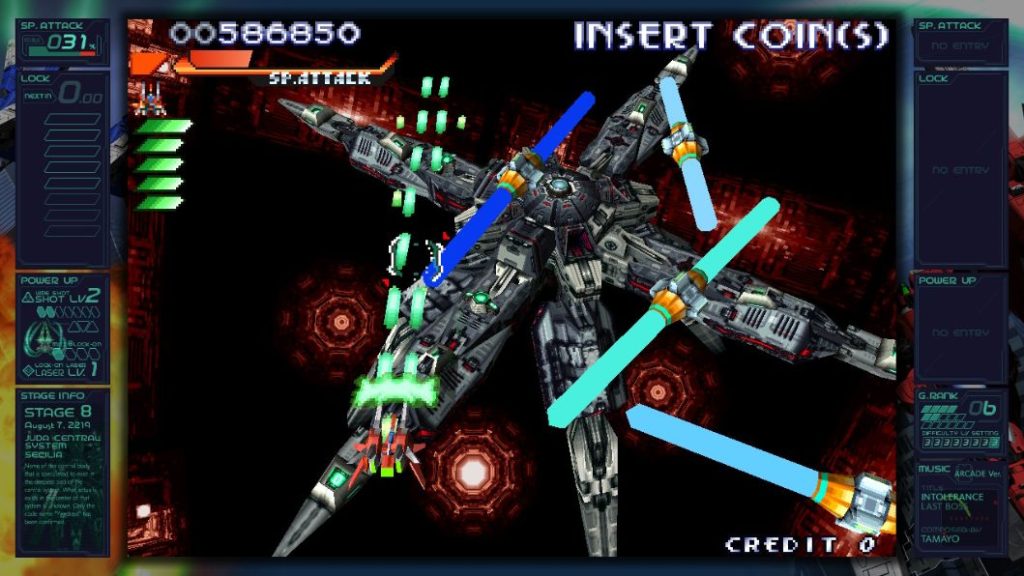
Vertizontal shooter originally release in 1996 for the Taito FX-B, a machine similar in power to the original PlayStation. RayStorm ditches the mostly 2D look in favour of 3D polygons reminiscent of G-Darius, in fact, they looked so similar to me that I looked up G-Darius to find it ran on the exact same hardware.
RayStorm is more of the same and that’s no bad thing. Sadly, the great 2D pixel look is gone and we are left with very early 3D, that said, it definitely has its own sense of charm.

RayStorm is a much harder game in my opinion than RayForce, I think it may just be the fact you have a lot more horizontal play and often enemies could sneak up to the sides of the screen. To counter this, we now have access to bombs which you may have noticed were completely absent from RayForce.
The bosses here are a highlight and even the first level boss sends you into some kind of chase sequence where you are following it at speed while avoiding laser beams and return fire.

Sadly, the seamless level transitions have been removed, a small gripe but some I got really accustomed to playing through RayForce. Overall, I’d say RayForce is my second favourite in the collection.
RayCrisis
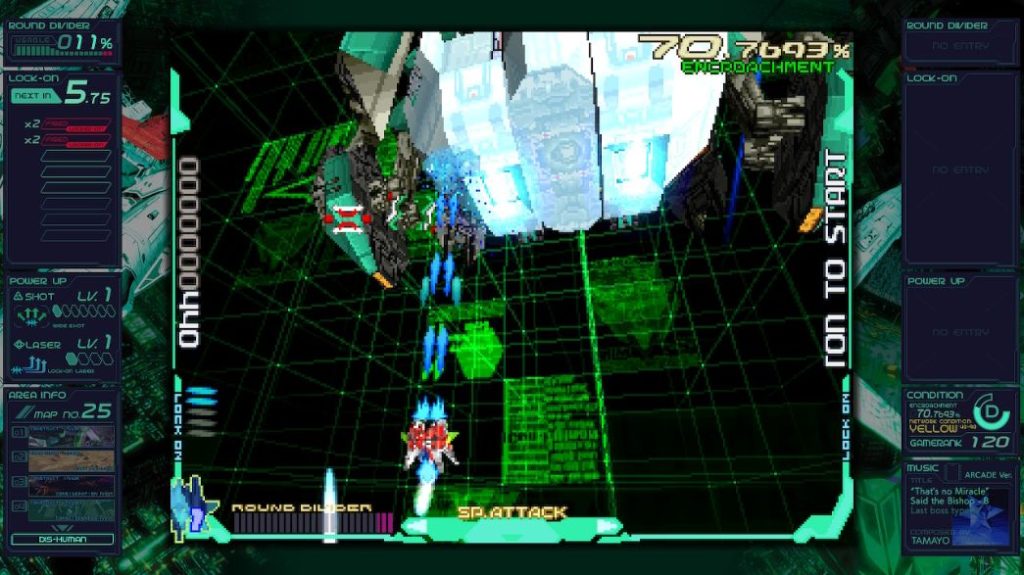
RayCrisis takes on a virtual reality aesthetic, specifically a late 90s virtual reality aesthetic. It follows on in terms of play from RayStorm but in my opinion is a lot harder, especially in the later levels.
You still have access to your regular shot, laser and bombs and some of the bosses in RayCrisis take an awful lot of firepower to take down.

Perspective changes quite a lot and almost feels like an old rail shooter at times as the camera pulls right out almost giving you the perspective of being right behind the ship at times, I can imagine it was very impressive stuff back in 1998 but I found it to be a bit of a distraction.
Due to the constant perspective changes, I found it a bit more difficult to tell if an enemy was underneath me which often lead to unexpected deaths, there’s really quite a lot going on screen all at once.
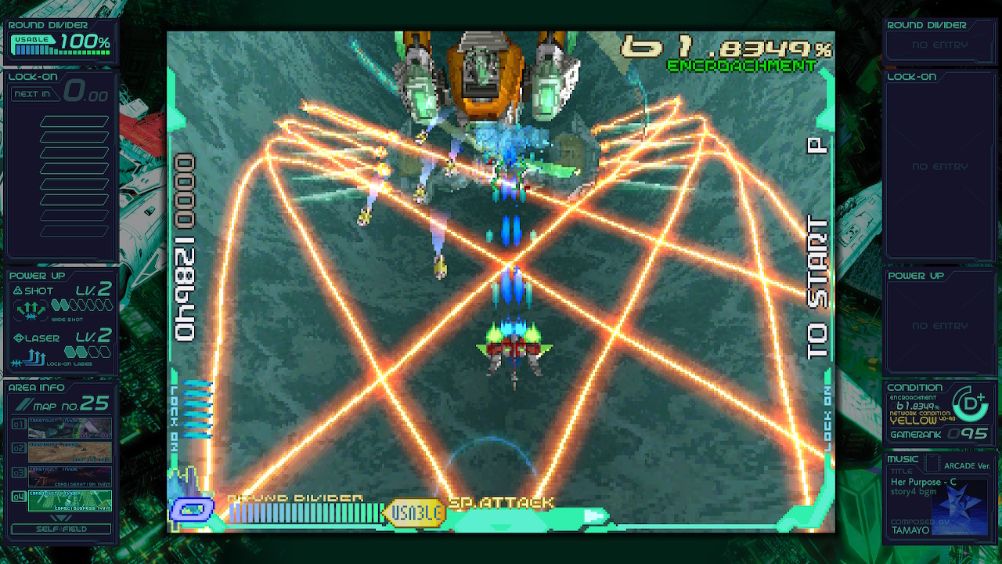
There’s a certain charm to the old polygonal jagged graphics which is very much on full display here in the original version of RayCrisis, I find it quite nostalgic, however, I would highly recommend playing the HD version as it has some additional areas that are not included in the original version.
Conclusion
Ray’z Arcade Chronology is one of the best arcade shmup collections you can buy and it is up there with the likes of the Darius Cozmic and Aleste collections which were both also by M2. For your money, you get access to two fantastic shooters and one that is pretty good with the HD ports of the latter two making this the definitive way to play them.
Overall, this collection will be keeping me busy for some time and I highly recommend you seek out a copy of your own.
9
Nintendo Switch review code kindly provided by PR Hound